

Generative AI chatbots are revolutionizing the way businesses and individuals interact with technology. Unlike traditional rule-based chatbots, generative AI chatbots rely on deep learning models, particularly large language models (LLMs), to generate human-like text based on the input they receive. These chatbots can understand context, respond in a natural language, and even engage in dynamic conversations. By processing massive amounts of text data, they can generate coherent, contextually appropriate responses that seem almost indistinguishable from human interaction.

The rapid development of generative AI technologies, including models like OpenAI’s GPT series, has opened new doors for industries like customer service, healthcare, education, and entertainment. With advanced capabilities such as generating personalized content, automating complex tasks, and providing real-time support, these chatbots are increasingly becoming indispensable. As AI continues to evolve, the future promises even more powerful applications that could change how we communicate with machines.
How Generative AI Chatbots Work
Generative AI chatbots are powered by advanced machine learning (ML) and natural language processing (NLP) technologies. Machine learning allows these systems to learn from large datasets, helping them recognize patterns and predict outcomes based on the information they’ve processed. NLP, a subset of AI, focuses on enabling machines to understand, interpret, and generate human language in a way that feels natural. This involves tasks like understanding grammar, context, and the underlying intent behind user input. Through these technologies, generative AI chatbots can engage in dynamic conversations, offering responses that are contextually appropriate and sound human-like.
Models such as OpenAI’s GPT (Generative Pre-trained Transformer) represent some of the most powerful tools used in generative AI chatbots. These models are trained on vast amounts of text data and use deep learning algorithms to generate coherent, relevant, and context-aware responses to various inputs. GPT and similar models rely on a transformer architecture, which excels in understanding the relationships between words, phrases, and sentences within a conversation. As these models continue to evolve, they enhance a chatbot’s ability to generate increasingly sophisticated and personalized responses, making AI-driven interactions more seamless and effective for users.
Functional Uses of Generative AI Chatbots
Generative AI chatbots are versatile tools used across various industries to streamline processes, enhance user experience, and provide real-time assistance. Below are some key functional uses:
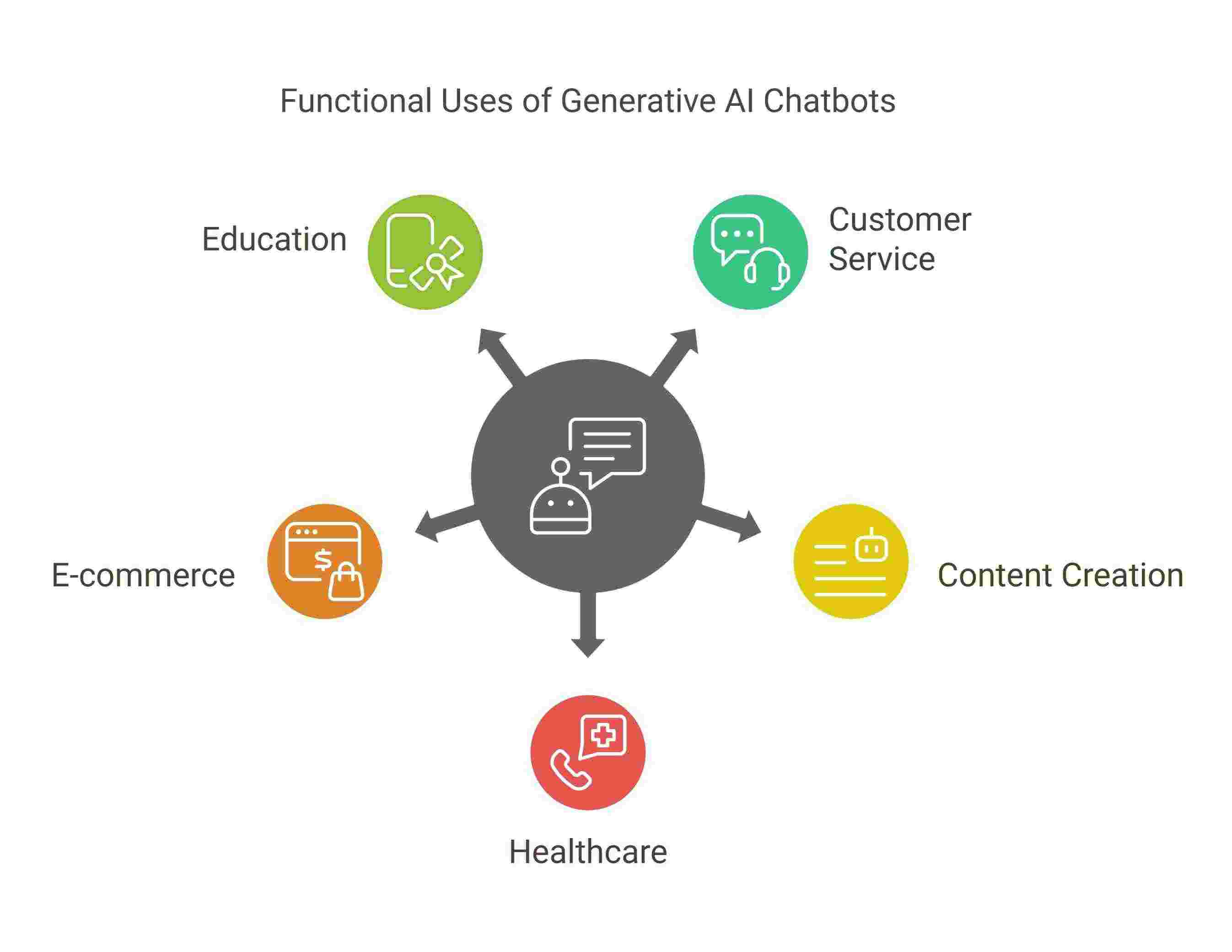
1. Customer Service
Generative AI chatbots have transformed customer service by offering automated, intelligent support. They can manage queries efficiently and provide real-time assistance, improving customer satisfaction.
- Managing Queries:
-
- Chatbots can respond to frequently asked questions, resolving simple issues without human intervention.
- They handle basic troubleshooting and guide customers through self-service options, reducing wait times.
- Providing Assistance:
-
- AI chatbots provide personalized responses based on user data, offering more tailored solutions.
- They can troubleshoot more complex issues by accessing a knowledge base or routing users to human agents when necessary.
- Enhancing User Experience:
-
- AI chatbots ensure quicker resolutions, providing 24/7 support and reducing the need for customers to wait for responses.
- They offer multi-language support, making customer service more accessible to a global audience.
2. Content Creation
Generative AI chatbots are widely used in the content creation process to assist writers and marketers in producing high-quality content.
- Generating Written Content:
-
- Chatbots can write articles, blog posts, and even technical documentation by processing user inputs and relevant keywords.
- They can be used for drafting initial content, which can later be refined by humans.
- Creating Scripts:
-
- AI chatbots help in drafting scripts for video content, podcasts, or even advertising spots by understanding the target audience and context.
- They can generate engaging narratives, ensuring that the content is coherent and aligns with brand messaging.
- Marketing Material:
-
- Generative AI chatbots assist in creating marketing copy, social media posts, and email newsletters that engage customers.
- They can adapt tone and style to suit different platforms and audience preferences.
3. Healthcare
Generative AI chatbots in healthcare assist both patients and providers by automating basic tasks and offering informational support.
- Symptom Checking:
-
- Chatbots help patients identify potential causes of symptoms by asking relevant questions and providing insights based on existing medical data.
- They offer general guidance, suggesting whether medical consultation is necessary or if self-care methods can be applied.
- Appointment Scheduling:
-
- AI chatbots assist in managing appointments by checking availability, booking consultations, and sending reminders to patients.
- They reduce administrative burden for healthcare providers and improve scheduling efficiency.
- Providing Health Advice:
-
- AI chatbots can offer general health advice or reminders for medication, check-ups, and healthy lifestyle choices.
- They can also assist patients by explaining medical procedures or providing pre-consultation information.
4. E-commerce
In e-commerce, generative AI chatbots play a critical role in enhancing the shopping experience, supporting both customers and businesses.
- Product Recommendations:
-
- Chatbots analyze customer preferences and browsing history to suggest products, improving the chances of making a sale.
- They can personalize recommendations based on user data and previous purchases, making shopping more relevant.
- Order Tracking:
-
- AI chatbots can provide real-time updates on order statuses, shipment tracking, and delivery timeframes.
- They help customers easily check the status of their orders, reducing customer inquiries to support teams.
- Guiding Customers Through Purchases:
-
- Chatbots can assist customers in navigating the e-commerce site, helping them filter products, compare prices, and finalize their purchases.
- They can also answer specific questions related to payment methods, shipping options, and return policies, ensuring a smooth transaction process.
5. Education
Generative AI chatbots in education are designed to support learning, provide personalized tutoring, and assist with course management.
- Tutoring:
-
- Chatbots can provide instant tutoring by answering student questions, explaining difficult concepts, and offering exercises or practice problems.
- They offer personalized learning experiences by adjusting responses based on the student’s progress and comprehension.
- Course Recommendations:
-
- AI chatbots can suggest courses or learning materials based on a student’s interests, academic history, and career goals.
- They guide students through available programs, helping them select the most appropriate educational path.
- Assisting with Learning Materials:
-
- Chatbots can serve as a guide to educational content, offering summaries, definitions, and explanations of complex topics.
- They provide additional learning resources like videos, articles, and exercises, allowing students to expand their knowledge beyond textbooks.
Advantages of Generative AI Chatbots
Generative AI chatbots offer significant advantages in terms of efficiency and scalability across various industries. These chatbots can handle a large volume of interactions simultaneously, providing instant responses to users regardless of the time or volume of queries. This capability makes them invaluable in environments where quick, real-time support is needed, such as customer service or tech support. By automating routine tasks and answering frequently asked questions, generative AI chatbots reduce the workload on human staff, allowing them to focus on more complex issues that require human expertise. Additionally, the scalability of AI chatbots ensures that businesses can manage peak periods, such as seasonal surges in demand, without the need to hire additional staff, thus maintaining operational efficiency and reducing overhead costs.
Moreover, generative AI chatbots are highly effective at personalizing interactions, making them more engaging and user-friendly. By analyzing data such as previous interactions and user preferences, these chatbots can tailor responses to suit the individual needs of each user. This level of personalization fosters a sense of connection and improves the overall user experience, whether it’s recommending products, offering advice, or providing support. The ability to simulate natural conversations further enhances engagement, as these chatbots can respond in a way that feels human-like, adapting to the tone and context of the conversation. This personalization not only increases user satisfaction but also helps build trust between users and the AI, which is crucial for long-term engagement and effective communication.
Conclusion:
Generative AI chatbots are paving the way for the future of human-computer interaction. Their ability to understand and generate natural language responses has already created a significant impact in sectors ranging from customer service to content creation. These systems can handle intricate inquiries, provide recommendations, and even simulate emotional responses, making them more effective than ever in serving human needs.
While generative AI chatbots bring immense potential, they also come with challenges such as ethical concerns, privacy issues, and the risk of misinformation. As AI technology matures, developers and policymakers must collaborate to ensure these tools are used responsibly and transparently. By addressing these challenges, generative AI chatbots can evolve to become even more valuable assets in the modern world, helping to enhance productivity and foster meaningful connections between people and technology.
FAQs:
- What is a gen
 erative AI chatbot?
 -
- A generative AI chatbot is an AI system that uses machine learning models to generate human-like responses based on input, allowing for natural, dynamic conversations.
- How does a generative AI chatbot work?
-
- These chatbots work by analyzing vast amounts of text data to predict and generate coherent, contextually accurate responses to user input.
- What are some applications of generative AI chatbots?
-
- They are widely used in customer support, content generation, healthcare assistance, and personal virtual assistants.
- Are generative AI chatbots accurate?
-
- They are highly accurate in many scenarios, but their performance depends on the quality of the training data and the complexity of the task.
- Can generative AI chatbots understand emotions?
-
- While not perfect, some advanced generative AI chatbots can simulate emotional responses based on contextual cues, making interactions feel more human-like.


Leave a Reply