

The integration of artificial intelligence (AI) with blockchain technology is shaping the future of autonomous financial systems. Crypto AI agents are intelligent programs designed to analyze market trends, execute trades, and manage blockchain-based operations with minimal human intervention. As AI and blockchain technologies continue to evolve, developing a robust crypto AI agent requires a systematic approach. This guide provides an in-depth look at the essential steps involved in building such an agent, covering key technologies, development strategies, security measures, and best practices.
Understanding Crypto AI Agents
Crypto AI agents leverage AI-driven decision-making combined with blockchain’s transparency and security. These agents operate based on pre-defined algorithms, continuously learning and adapting to market conditions. Their primary functions include:
- Market trend analysis: Identifying bullish and bearish patterns using historical data and real-time information.
- Automated trading execution: Placing buy or sell orders based on predictive analytics and risk management strategies.
- Risk assessment and portfolio management: Managing investments while optimizing returns and mitigating risks.
- Blockchain data verification: Validating transactions and monitoring network activity to ensure transparency.
With a clearly defined objective, developers can proceed with selecting the necessary technology stack and building an efficient crypto AI agent.
Step 1: Define the Agent’s Objectives
Before diving into development, it is essential to outline the specific objectives of the AI agent. The objectives will determine the features, functionalities, and underlying technologies. Common use cases include:
- Trading bots: Executing automated trades using AI-powered predictive models.
- Portfolio management systems: Balancing assets and adjusting holdings based on market movements.
- DeFi (Decentralized Finance) assistants: Managing lending, borrowing, and staking operations in DeFi ecosystems.
- Security monitoring tools: Detecting fraudulent transactions and flagging potential security threats.
Clearly defining the agent’s purpose ensures that development efforts align with the intended outcomes.
Step 2: Choose the Right Technologies
The foundation of any crypto AI agent lies in the technology stack. The key components include:
Blockchain Platforms
Choosing the right blockchain network is crucial, as it determines transaction speed, security, and smart contract capabilities. Popular choices include:
- Ethereum: A widely used platform for smart contracts and decentralized applications (dApps).
- Binance Smart Chain (BSC): Offers faster and lower-cost transactions.
- Solana: Known for its high-speed and low-latency blockchain infrastructure.
- Polkadot: Enables cross-chain interactions and enhanced scalability.
AI Frameworks and Tools
AI plays a pivotal role in developing intelligent trading strategies and risk assessment models. Some essential AI frameworks include:
- TensorFlow and PyTorch: Used for deep learning and predictive analytics.
- Scikit-learn: Ideal for machine learning algorithms such as regression and classification.
- NLTK and SpaCy: Useful for sentiment analysis and natural language processing.
Data Sources for Training
Accurate data is vital for training AI models. Developers can obtain datasets from:
- Cryptocurrency exchange APIs: Binance, Coinbase, and Kraken provide real-time and historical market data.
- On-chain analytics: Platforms like Glassnode and Santiment offer blockchain transaction insights.
- News and social media sentiment analysis: AI-driven tools analyze tweets, articles, and blogs to gauge market sentiment.
Step 3: Develop and Train AI Models
Once the technology stack is in place, the next step is building and training AI models. This involves:
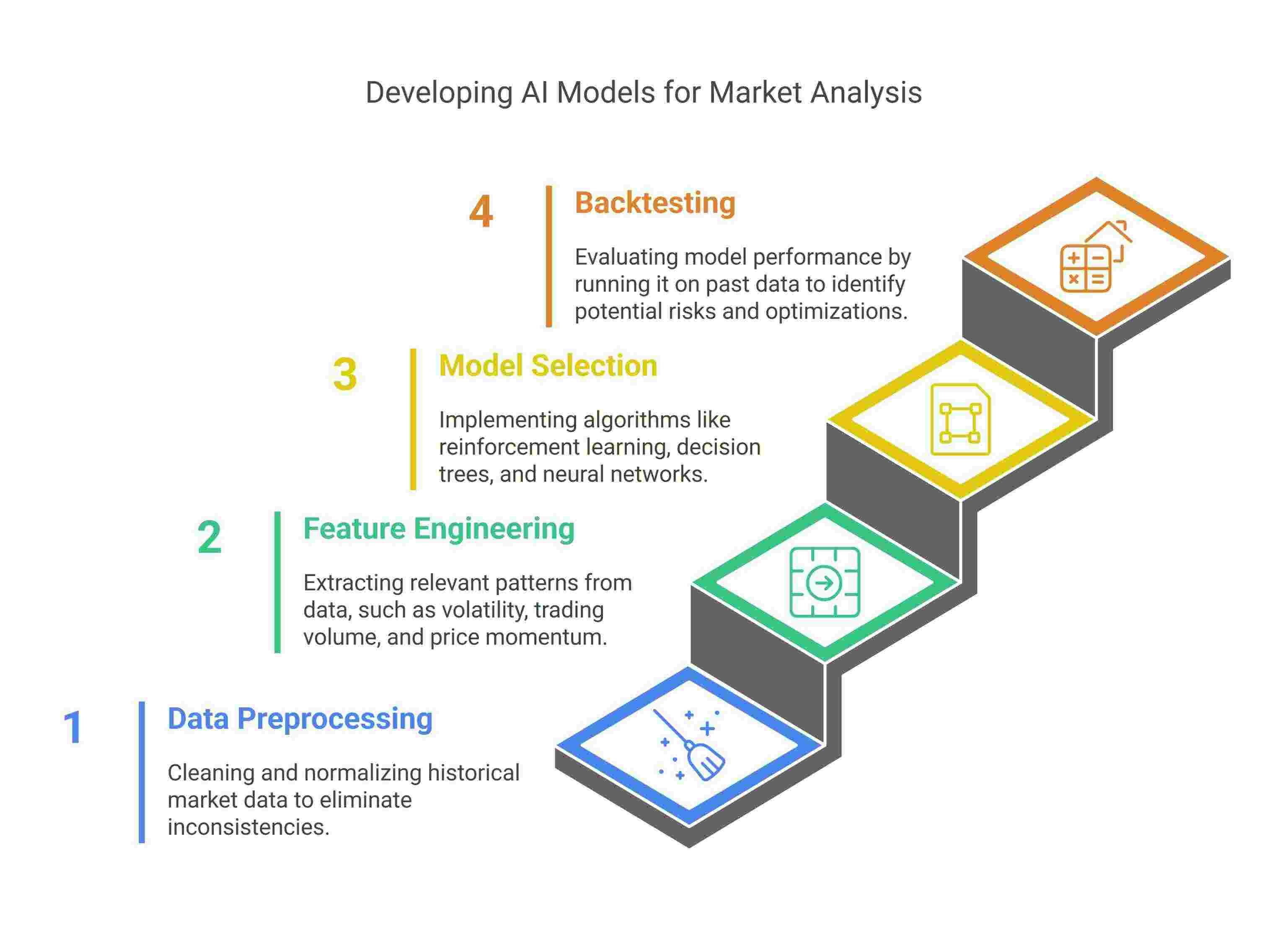
- Data Preprocessing: Cleaning and normalizing historical market data to eliminate inconsistencies.
- Feature Engineering: Extracting relevant patterns from data, such as volatility, trading volume, and price momentum.
- Model Selection: Implementing algorithms like reinforcement learning, decision trees, and neural networks.
- Backtesting: Evaluating model performance by running it on past data to identify potential risks and optimizations.
Step 4: Smart Contract Integration
Smart contracts enable decentralized automation of crypto transactions. They ensure that the AI agent functions transparently and without human intervention. Key considerations include:
- Writing secure smart contracts: Using Solidity (Ethereum), Rust (Solana), or Move (Aptos) to develop decentralized logic.
- Testing on testnets: Deploying contracts on test environments like Rinkeby or Goerli before launching on the mainnet.
- Implementing fail-safe mechanisms: Ensuring that transactions can be halted in case of errors or market anomalies.
Step 5: Implement Security Measures
Security is a major concern when dealing with crypto AI agents. Developers must incorporate robust security mechanisms, including:
- Encryption protocols: Ensuring data security through AES or RSA encryption.
- Regulatory compliance: Adhering to anti-money laundering (AML) and Know Your Customer (KYC) guidelines.
- Multi-factor authentication (MFA): Enhancing access security for trading and fund management accounts.
- Continuous auditing: Running smart contract audits to detect vulnerabilities.
Step 6: Testing and Optimization
Thorough testing is required to validate the AI agent’s functionality. This phase includes:
- Simulation testing: Running agent models in simulated environments to assess decision-making accuracy.
- Stress testing: Evaluating performance under extreme market conditions.
- User feedback integration: Gathering insights from beta users to enhance usability.
Optimization ensures that the agent adapts to market changes and improves over time.
Step 7: Deployment and Monitoring
After successful testing, the AI agent is deployed into a live environment. However, continuous monitoring is essential to maintain efficiency. Steps include:
- Logging and performance tracking: Using tools like Prometheus and Grafana to monitor real-time agent activity.
- Model retraining: Updating AI models based on new market data and behavioral patterns.
- Risk assessment dashboards: Implementing visual tools for tracking risk levels and portfolio health.
Future Trends in Crypto AI Agents
With AI and blockchain rapidly advancing, future trends in crypto AI agent development include:
- Decentralized autonomous agents (DAAs): Self-governing AI entities that interact with smart contracts and dApps.
- AI-powered predictive DeFi tools: Enhanced lending and staking optimization models.
- Quantum-resistant security protocols: Protecting blockchain transactions from quantum computing threats.
- Cross-chain AI agents: Facilitating interoperability between multiple blockchain networks.
Conclusion
Developing a crypto AI agent involves multiple stages, from defining objectives and selecting technologies to smart contract integration and security implementation. As AI and blockchain continue to evolve, these agents will play a crucial role in decentralized finance, trading, and risk management. By following a structured approach, developers can create efficient and secure crypto AI agents that navigate the complexities of the cryptocurrency market while enhancing automation and decision-making.


Leave a Reply