

Cryptocurrency, especially Bitcoin and Ethereum, has been steadily gaining ground in various industries. The real estate sector, traditionally slow to adapt to new technologies, is increasingly embracing digital currencies. The appeal lies in the ability to execute transactions faster, often reducing the need for middlemen, such as banks. In addition, the transparent and secure nature of blockchain technology, which underpins cryptocurrencies, offers a level of trust and efficiency that traditional payment methods cannot always guarantee.

Moreover, cryptocurrency offers global access to real estate transactions. In an increasingly interconnected world, people from different parts of the globe can invest in properties without dealing with currency exchange rates or time-consuming international transfers. As both buyers and sellers recognize these benefits, more real estate agents, developers, and property investors are starting to accept cryptocurrency as a legitimate payment method.
The Benefits of Cryptocurrency in Real Estate
- Speed and Efficiency in Transactions: Cryptocurrency transactions are often faster than traditional banking systems. Traditional methods of transferring funds, especially across borders, can take several days due to intermediary banks and the need for currency conversions. Cryptocurrencies, on the other hand, can be transferred almost instantaneously, regardless of geographical location. This speed can make real estate transactions smoother, reducing delays in property purchases and ensuring quicker settlement times.
- Reduced Transaction Costs and Middlemen: In conventional real estate transactions, there are multiple intermediaries involved, including banks, real estate agents, title companies, and lawyers. These intermediaries typically charge fees for their services, which can significantly increase the total cost of a transaction. With cryptocurrency, the need for intermediaries is minimized, as the blockchain can validate and secure transactions without relying on traditional entities. This reduction in middlemen can lead to lower transaction costs and make the entire process more affordable for buyers and sellers.
- Global Accessibility for Investors: One of the most compelling benefits of cryptocurrency is its global accessibility. Unlike traditional currency systems, cryptocurrencies are not bound by borders or exchange rates, allowing investors from anywhere in the world to participate in real estate markets. This democratization of access opens up opportunities for international buyers to invest in properties without the complications of currency conversion, cross-border regulations, or long waiting times associated with international transfers. As cryptocurrencies become more widely accepted, they enable a more inclusive and diverse real estate investment environment.
Security and Transparency
Blockchain Technology and Its Role in Securing Transactions
Blockchain technology plays a crucial role in securing transactions by offering a decentralized and tamper-proof system. Unlike traditional centralized systems, where data is stored on a single server or network, blockchain utilizes a distributed ledger. This means that data is stored across a network of computers, or “nodes,” making it far more difficult for any single party to alter or manipulate it.
Each transaction that occurs on a blockchain is verified by network participants using cryptographic techniques. Once verified, transactions are recorded in “blocks,” and these blocks are linked together in a chronological chain, hence the name “blockchain.” Once added to the blockchain, a transaction is nearly impossible to change without being detected by the network. This high level of security helps to prevent fraud, unauthorized access, and data breaches, making blockchain a trusted method for conducting secure transactions in various industries, including finance, healthcare, and supply chain management.
The transparency and immutability of blockchain transactions offer a level of accountability that is difficult to achieve with traditional centralized systems. Every participant in the network can access and verify the information stored on the blockchain, ensuring that records are accurate and traceable. This feature is especially beneficial in sectors where trust and security are paramount.
How Cryptocurrency Enhances Transparency and Reduces Fraud
Cryptocurrency, built on blockchain technology, enhances transparency by providing a public, auditable, and verifiable record of all transactions. Unlike traditional financial systems, where transactions may be hidden or opaque, cryptocurrency transactions are recorded on a blockchain that anyone can inspect. Each transaction is time-stamped, and all participants in the network can see the transaction history, making it possible to trace funds and verify their legitimacy.
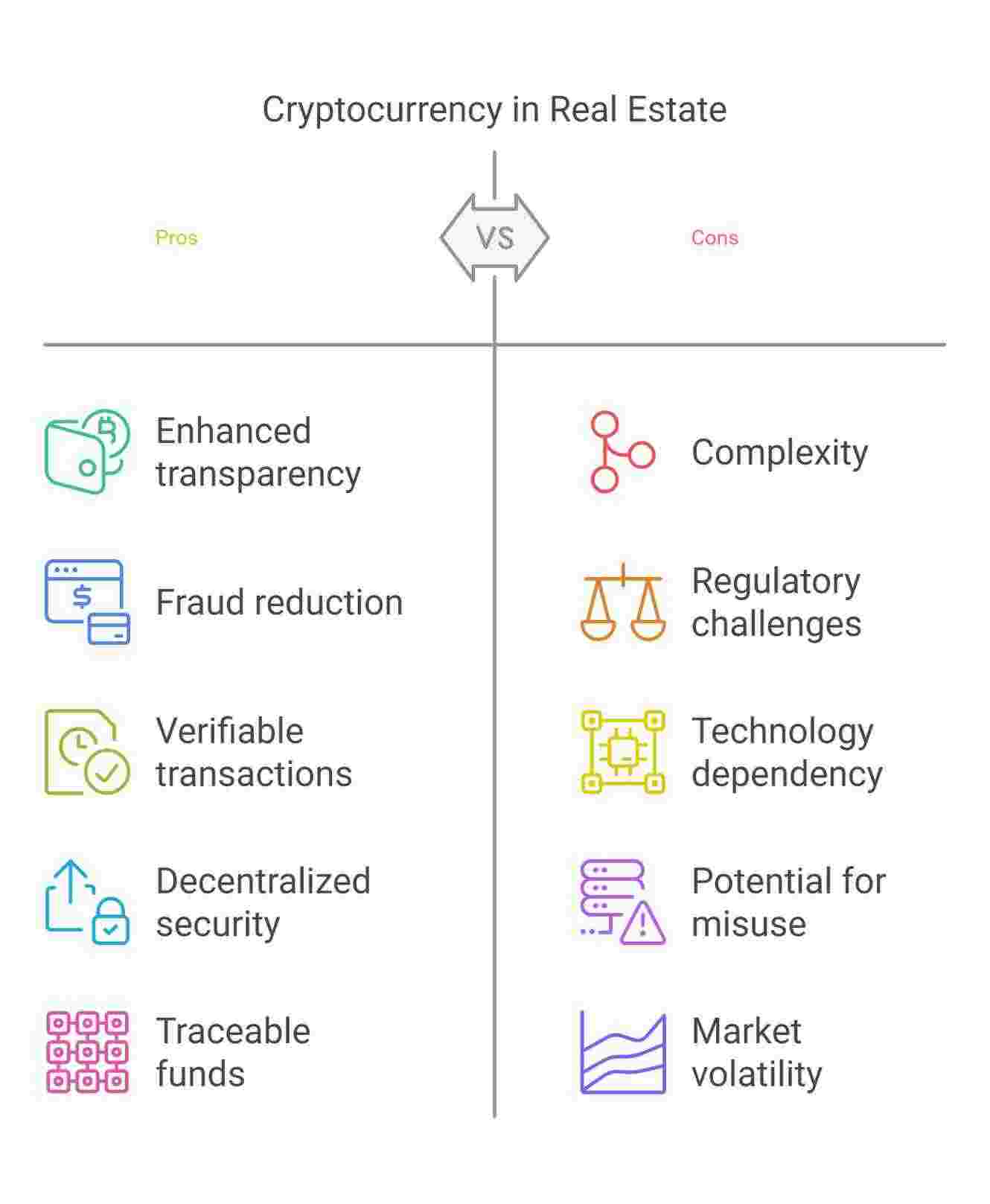
One of the main ways cryptocurrency reduces fraud is through its reliance on cryptographic techniques. Each transaction is secured using private and public keys, which ensures that only authorized parties can access the funds. Fraudulent activities, such as double-spending or altering transaction details, become much more difficult due to the decentralized nature of cryptocurrency networks. As each transaction is validated by multiple participants in the network, the possibility of fraudulent manipulation is significantly reduced.
Future of Cryptocurrency in Real Estate
As cryptocurrency continues to evolve, its potential impact on various industries becomes more evident, and the real estate sector is no exception. The future of cryptocurrency in real estate is brimming with opportunities, as it can revolutionize the way properties are bought, sold, and managed. Below are some key points on how the relationship between cryptocurrency and real estate may evolve:
Predictions for Growth and Widespread Adoption
Cryptocurrency’s presence in the real estate market is still in its early stages, but many experts predict that its role will grow significantly over the next decade. As blockchain technology gains more recognition for its security, transparency, and efficiency, the use of digital currencies like Bitcoin, Ethereum, and others will become increasingly mainstream in property transactions.
One of the primary drivers of this growth is the global push towards decentralization. Traditional banking systems and intermediaries may be bypassed, reducing transaction costs, speeding up processes, and making it easier for buyers and sellers to conduct business across borders. Real estate agents, developers, and buyers will likely adapt to accept cryptocurrency as a legitimate form of payment, driven by both demand and the growing comfort with digital assets.
Additionally, as cryptocurrencies like Bitcoin have shown resilience and growth, more individuals and institutions are seeking to diversify their investments. Real estate, traditionally a safe and valuable asset, paired with cryptocurrency, could present an attractive option for portfolio diversification and wealth protection in a changing economic environment.
The Potential Long-Term Impact on the Real Estate Market
The long-term impact of cryptocurrency on the real estate market could be transformative. In the short term, the integration of cryptocurrency will focus on simplifying transactions, enhancing efficiency, and reducing the time and paperwork associated with property deals. Over time, however, the effects may go beyond just payment methods.
- Increased Accessibility and Global Reach: One of the most significant changes will be the opening of global markets for real estate transactions. With cryptocurrency, geographic boundaries no longer pose a barrier to international property buyers. This will open up real estate markets in popular locations to foreign investors without the complex exchange rate issues and lengthy cross-border banking processes that exist today.
- Tokenization of Real Estate Assets: A major trend gaining traction is the concept of tokenizing real estate. This allows property to be divided into smaller, tradable units, enabling fractional ownership. Individuals who may not have the funds to buy an entire property can invest in smaller portions of real estate, thus democratizing access to real estate investment and potentially boosting liquidity in the market.
- Faster Transactions and Reduced Costs: By eliminating the need for middlemen, cryptocurrencies can streamline property transactions, making them faster and more cost-effective. The traditional process often involves brokers, banks, title companies, and lawyers, all of whom add time and fees to the deal. Cryptocurrencies could simplify this process by using smart contracts—self-executing contracts with terms directly written into code—to ensure the completion of transactions without the need for intermediaries.
- Smart Contracts for Property Management: Blockchain technology, the backbone of cryptocurrencies, can also play a significant role in the long-term management of real estate. Smart contracts could automate various tasks in property management, such as rent collection, maintenance requests, or lease agreements, thus reducing the administrative burden for both landlords and tenants.
- Security and Transparency: The blockchain ledger offers unparalleled transparency and security. All cryptocurrency transactions are recorded on the blockchain, providing a detailed and immutable record of ownership and transactions. This could significantly reduce fraud, disputes, and uncertainties in real estate dealings, which is particularly important for high-value properties.
Conclusion The growing interest in cryptocurrency within the real estate industry is a clear sign of changing times. Real estate professionals are taking note of the advantages, which include enhanced security, transparency, and faster transactions. For investors, this provides an opportunity to tap into new and more efficient ways of handling property deals.
However, despite the promise of cryptocurrencies in real estate, the industry faces regulatory and market volatility challenges. As governments and institutions navigate the complexities of cryptocurrency regulations, the pace at which digital currencies are adopted in real estate will likely continue to evolve. In the long run, cryptocurrencies might not just be a payment alternative, but could fundamentally reshape how property transactions are conducted worldwide.


Leave a Reply