

Bitcoin is often regarded as a purely digital asset, existing only in the form of cryptographic code secured on the blockchain. However, a fascinating subset of Bitcoin enthusiasts has brought cryptocurrency into the physical world through tangible representations known as physical bitcoins. These physical coins, often crafted with intricate designs, offer a unique way to engage with Bitcoin beyond the digital sphere.
For some, physical bitcoins serve as a way to introduce new users to the concept of digital currency. For others, they are valuable collectibles, much like rare coins or precious metals. As Bitcoin continues to gain mainstream recognition, physical bitcoins have carved out a niche of their own in the cryptocurrency ecosystem.
In this guide, we will explore the origins, types, security aspects, and future of physical bitcoins. Whether you’re a collector, investor, or simply curious, this deep dive will illuminate everything you need to know about this niche yet intriguing market.
1. The Genesis of Physical Bitcoins
Pioneering Creations
The concept of physical bitcoins emerged in the early 2010s, when entrepreneur Mike Caldwell introduced the Casascius coin. These coins were designed as actual physical tokens that could store Bitcoin value through embedded private keys hidden under a tamper-resistant hologram. Caldwell’s vision was to make Bitcoin more tangible and accessible to the mainstream audience.
The Casascius coins quickly gained popularity among early Bitcoin adopters, as they provided a secure and tangible way to store and transfer Bitcoin. Each coin had a private key engraved beneath a security seal, which could be peeled off to access the Bitcoin balance.
Evolution Over Time
While Casascius coins were a breakthrough, regulatory concerns led to their discontinuation in 2013. The U.S. government classified loaded physical bitcoins as a form of money transmission, which required a license to distribute. As a result, Caldwell ceased the production of loaded coins, though unloaded versions remained in circulation.
However, the idea lived on, inspiring other manufacturers like Lealana, Titan Bitcoin, and Denarium to create their own versions. Today, these coins serve both as collectibles and, in some cases, as functional Bitcoin wallets.
2. Anatomy of a Physical Bitcoin
Design Elements
Physical bitcoins come in various designs, featuring high-quality materials such as gold, silver, or brass. Many coins include engravings of Bitcoin’s iconic “B” symbol, QR codes linking to blockchain data, and holographic security features that protect embedded private keys.
Some designs also incorporate serial numbers, making them unique collectibles. The engraving techniques and metal composition contribute to their aesthetic appeal and overall market value.
Embedded Value
Some physical bitcoins come pre-loaded with cryptocurrency, functioning as both a collector’s item and a store of value. These coins allow holders to “redeem” the Bitcoin by peeling back the hologram and entering the private key into a digital wallet. However, doing so often reduces the coin’s numismatic value.
For collectors, an untouched hologram is a crucial factor in determining a coin’s worth. Once the hologram is peeled, the coin loses its ability to verify its authenticity as an original loaded coin.
3. Collectible vs. Functional: Types of Physical Bitcoins
Purely Commemorative Coins
Not all physical bitcoins contain actual cryptocurrency. Many are designed as decorative or symbolic pieces that celebrate Bitcoin’s impact on the world of finance. These coins are popular among enthusiasts who appreciate the artistic craftsmanship and historical significance.
Commemorative coins often feature intricate designs, including depictions of blockchain-related themes, prominent figures in Bitcoin history, or even fictional motifs representing decentralization and financial freedom.
Loaded Coins
Loaded coins, such as the original Casascius coins, contain a specific amount of Bitcoin, making them a hybrid between a collectible and a functional cryptocurrency wallet. These coins are rare and highly valued due to their dual nature and limited supply.
Collectors often seek loaded coins with untouched holograms, as these represent an unclaimed digital asset, increasing their desirability and market price.
4. The Art of Collecting Physical Bitcoins
Rarity and Value
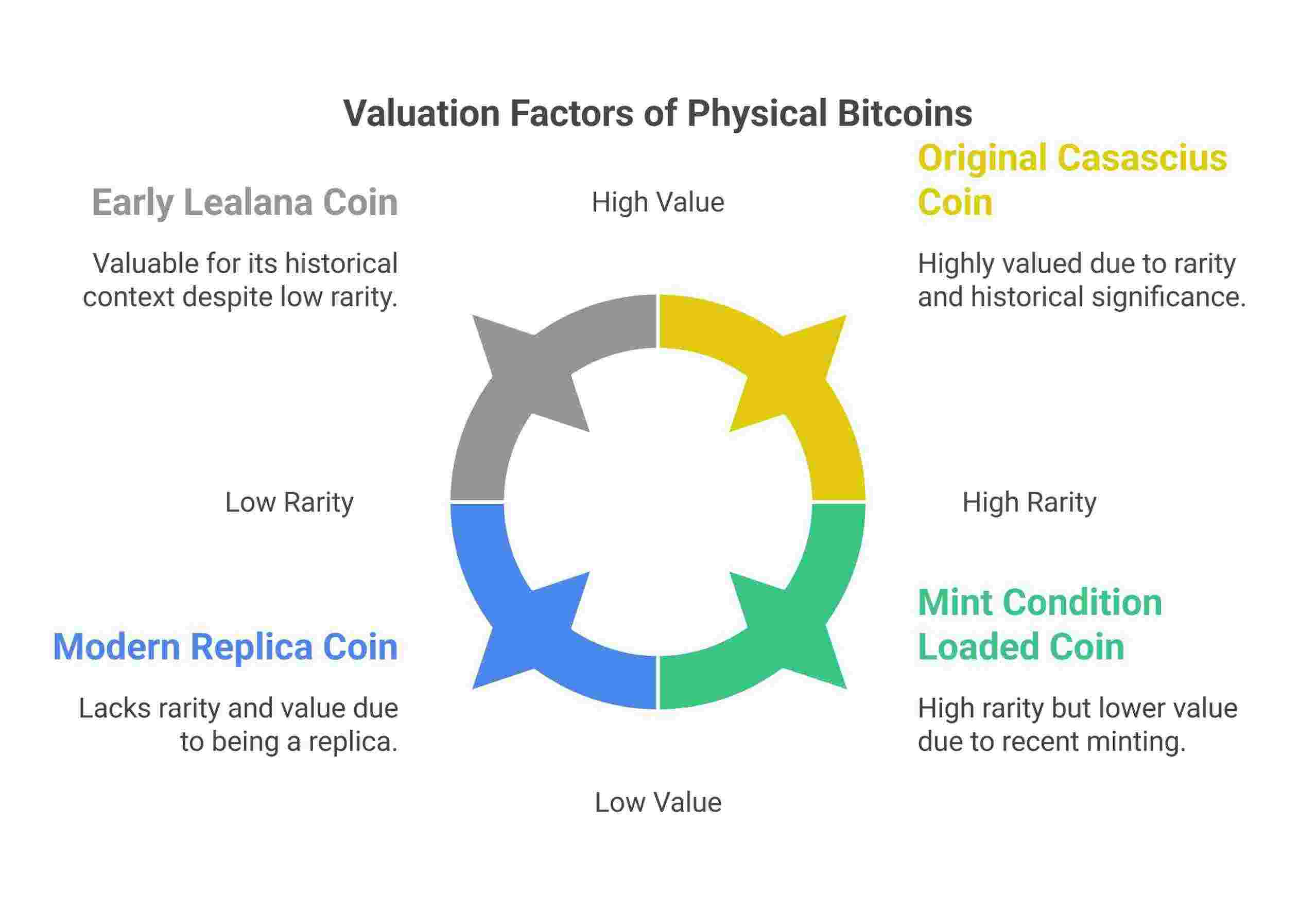
Several factors influence the value of a physical bitcoin, including:
- Limited Edition: Coins produced in small batches tend to appreciate in value.
- Loaded vs. Unloaded: Coins that still contain their original Bitcoin balance are often worth significantly more.
- Condition and Authenticity: Coins that remain in mint condition with intact holograms fetch the highest prices.
- Manufacturer and Origin: Original Casascius coins and early Lealana coins tend to be the most valuable.
- Historical Significance: Coins produced during Bitcoin’s early years (2011-2014) are considered more valuable due to their association with Bitcoin’s formative period.
Notable Auctions and Sales
The market for physical bitcoins has seen remarkable transactions. For instance, a 2013 0.1 BTC Casascius coin was sold for $33,600 at an auction in 2022, demonstrating the premium value that collectors place on these artifacts.
Some of the most expensive sales include:
- A 1 BTC Casascius coin from 2011 sold for over $100,000 due to its rarity and historical significance.
- A 5 BTC Titan Bitcoin fetched over $150,000 in a private transaction.
5. Security Implications and Risks
Authenticity Concerns
As the popularity of physical bitcoins has grown, so has the risk of counterfeits. Buyers should verify authenticity by checking serial numbers, inspecting security features, and purchasing from reputable sources.
Counterfeit physical bitcoins may have:
- Poorly designed holograms that lack tamper-proof features.
- Incorrect or missing serial numbers that do not match the manufacturer’s database.
- Weaker or non-existent cryptographic security, making them useless as Bitcoin wallets.
Storage and Preservation
To maintain the integrity of physical bitcoins, collectors should:
- Use Airtight Cases: Exposure to air and humidity can cause oxidation or tarnishing of metal coins.
- Avoid Peeling Off Holograms: Once a coin’s security seal is broken, its numismatic and collector value decreases significantly.
- Store in Secure Locations: A safe deposit box, a home safe, or a professional storage service is recommended to prevent theft.
- Temperature and Humidity Control: Coins should be stored in a cool, dry environment to prevent corrosion or material degradation.
Theft and Loss Prevention
Since physical bitcoins often contain valuable cryptocurrency, they are prime targets for theft. Here are some key strategies to protect them:
- Physical Security: Use strong safes, lockboxes, or bank vaults for storage.
- Insurance: Some insurance companies offer policies that cover collectible coins and cryptocurrency-related assets.
- Digital Record Keeping: Maintain a record of serial numbers and purchase receipts in case authentication is needed later.
Redeeming Loaded Coins Safely
If you decide to redeem a loaded physical bitcoin, consider the following precautions:
- Verify Balance Before Peeling the Hologram: Use blockchain explorers to ensure the associated address still holds Bitcoin.
- Use a Secure and Offline Computer: When entering a private key, avoid exposing it on an internet-connected device to prevent hacking.
- Transfer Bitcoin to a Secure Wallet Immediately: Once redeemed, move the funds to a hardware or multisignature wallet for added security.
6. Legal and Regulatory Landscape
Jurisdictional Variations
Different countries have varying perspectives on physical bitcoins. Some classify them as legal collectibles, while others view them as unregulated financial instruments. Collectors should research their local regulations to ensure compliance.
Tax Implications
Selling a loaded physical bitcoin may incur capital gains tax, similar to selling cryptocurrency. Additionally, trading physical bitcoins as collectibles may have different tax implications based on jurisdiction. Consulting with a tax professional is advisable.
Conclusion: The Enduring Charm of Tangible Crypto
Physical bitcoins offer a fascinating intersection between the digital and physical worlds. While Bitcoin was designed to be entirely digital, the demand for tangible representations of cryptocurrency has persisted.
For collectors, physical bitcoins hold historical and aesthetic value, representing the early days of Bitcoin’s evolution. For investors, they serve as both a novelty and a rare asset class, with some loaded coins appreciating significantly in value.
However, owning physical bitcoins comes with responsibilities. Security is paramount, as these coins can be lost, stolen, or counterfeited. Proper storage, authentication checks, and careful handling are essential to preserve their value.
Looking ahead, the future of physical bitcoins is uncertain but promising. Advances in blockchain technology, authentication methods, and smart contracts may further enhance their appeal. Whether as collectibles or functional Bitcoin wallets, physical bitcoins continue to captivate cryptocurrency enthusiasts worldwide.


Leave a Reply