

Cryptocurrency has evolved from a niche digital asset to a significant part of the global financial ecosystem. Initially known for its association with Bitcoin, cryptocurrency now encompasses a vast array of digital currencies such as Ethereum, Litecoin, and many others. These decentralized digital assets are built on blockchain technology, offering a secure and transparent means of transferring value across the globe without the need for intermediaries like banks.

As cryptocurrencies gain traction, their role in everyday transactions is becoming increasingly important. More businesses, both online and physical, are beginning to accept cryptocurrency as a form of payment, opening new possibilities for consumers. In many ways, cryptocurrency offers a convenient, efficient, and innovative way to handle daily expenses.
Understanding how to use cryptocurrency for everyday payments is crucial in this evolving digital economy. By adopting crypto for daily transactions, individuals can enjoy several benefits, such as lower transaction fees, faster cross-border payments, and greater control over their financial transactions. Furthermore, it offers users privacy and security that traditional payment methods may lack. The flexibility of crypto allows for a seamless shopping experience, bill payments, and even in-store purchases, all with minimal hassle.
In this guide, we’ll explore how you can integrate cryptocurrency into your daily life, helping you to navigate this modern payment system with ease and confidence.
What is Cryptocurrency?
Cryptocurrency is a type of digital or virtual currency that relies on cryptography for security. Unlike traditional currencies, such as the dollar or euro, cryptocurrencies are decentralized and operate on a technology called blockchain, which ensures transparency and security without the need for intermediaries like banks. This means transactions are verified by a network of computers rather than a central authority.
Key Features of Digital Currencies:
- Decentralization: Cryptocurrencies are not controlled by any central authority, like a government or financial institution. This decentralization is a key feature that distinguishes digital currencies from traditional money systems.
- Blockchain Technology: The majority of cryptocurrencies are built on blockchain technology. This distributed ledger system ensures all transactions are recorded and validated across a network of computers, providing a high level of security and transparency.
- Cryptography: Cryptography ensures the security of transactions and the creation of new units. It involves complex algorithms that protect the privacy and integrity of data, making it difficult for fraudsters to alter transactions.
- Anonymity and Privacy: While all transactions are recorded on the blockchain, the identities of those involved are often pseudonymous, offering a degree of privacy in transactions.
- Limited Supply: Many cryptocurrencies, such as Bitcoin, have a fixed supply limit, making them deflationary in nature. This can affect their value over time as demand grows.
How Cryptocurrencies Work for Payments
Overview of Blockchain Technology
Blockchain is the foundational technology behind all cryptocurrencies. It is a decentralized, distributed ledger system that records transactions across multiple computers, ensuring transparency, security, and immutability. Here’s how it works in the context of cryptocurrency payments:
- Decentralized Network: Unlike traditional banking systems, blockchain is not controlled by a central authority. This means there’s no intermediary, like a bank, involved in processing transactions.
- Immutable Ledger: Once a transaction is recorded in a block on the blockchain, it cannot be altered or deleted. This ensures the integrity of the transaction history and protects against fraud or tampering.
- Distributed Consensus: The network nodes (computers) validate transactions using consensus mechanisms like Proof of Work (PoW) or Proof of Stake (PoS). This ensures that all participants in the network agree on the transaction’s legitimacy.
How Transactions are Processed
Cryptocurrency transactions follow a process that ensures they are securely validated and added to the blockchain:
- Initiation: The sender creates a transaction using their cryptocurrency wallet. The transaction includes the recipient’s wallet address, the amount, and any necessary fees.
- Broadcasting: The transaction is broadcast to the network, where it is picked up by miners or validators.
- Verification: Miners or validators check the transaction’s legitimacy. This involves verifying the sender’s balance and ensuring they have the correct private key to sign the transaction.
- Confirmation and Block Creation: Once verified, the transaction is included in a new block. The block is added to the blockchain after being confirmed by the network through consensus.
- Completion: The transaction is considered complete once it is recorded on the blockchain. The recipient can now access the cryptocurrency in their wallet.
Key Concepts: Wallet Addresses, Private Keys, Public Keys
For a smooth cryptocurrency payment experience, understanding key concepts like wallet addresses, private keys, and public keys is essential:
- Wallet Address: A wallet address is a unique string of characters that acts as the recipient’s identifier in a cryptocurrency transaction. It is similar to a bank account number but is used in the blockchain network. The address is where cryptocurrencies are sent.
- Private Key: The private key is a secret code known only to the owner of the wallet. It’s used to sign transactions and provide proof of ownership. Without the private key, the funds cannot be accessed or transferred. It must be kept secure and never shared.
- Public Key: A public key is paired with a private key and is visible to others. It is used to receive funds into a wallet. While it’s safe to share your public key, the private key must remain confidential to protect your assets.
How to Use Cryptocurrency for Online Shopping
Step-by-step guide to making payments with cryptocurrency
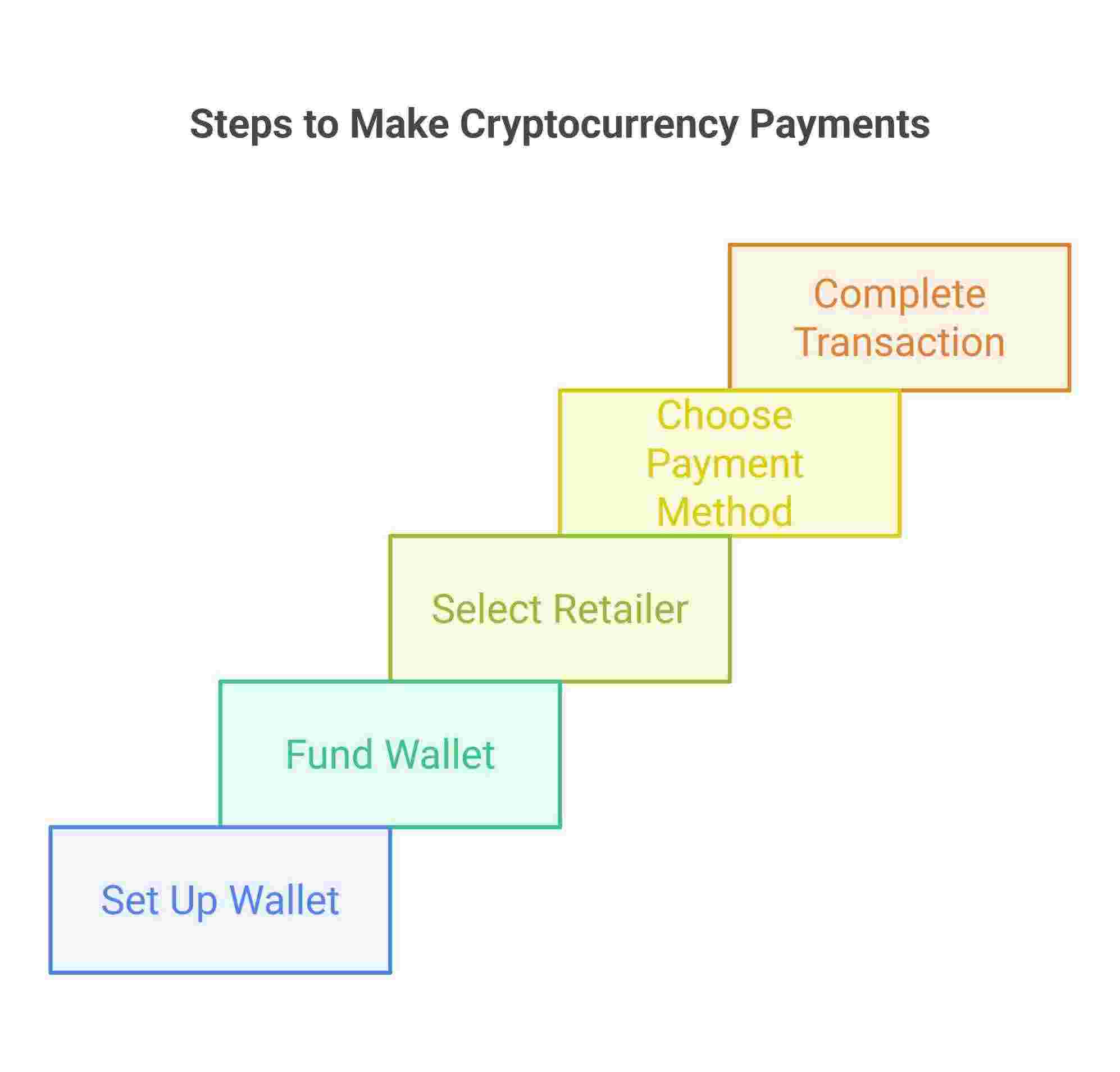
- Set up a cryptocurrency wallet:
-
- Choose a reputable wallet (hardware or software-based) to store your crypto securely. Popular wallet options include Coinbase, MetaMask, and Ledger.
- Ensure your wallet supports the cryptocurrency you plan to use (e.g., Bitcoin, Ethereum, or stablecoins like USDT).
- Fund your wallet:
-
- Purchase cryptocurrency through an exchange platform (e.g., Coinbase, Binance) using traditional currency or trade other crypto assets.
- Transfer your crypto to your wallet address for use in payments.
- Select a retailer or platform that accepts crypto:
-
- Many online stores now accept cryptocurrency payments, such as Overstock, Newegg, and Shopify-powered stores.
- Ensure the store displays accepted crypto logos (e.g., Bitcoin, Ethereum) during the checkout process.
- Choose cryptocurrency as the payment method:
-
- At checkout, look for a payment option labeled “Pay with Crypto,” “Bitcoin Payment,” or “Crypto Payment Gateway.”
- Choose your preferred cryptocurrency from the list of accepted options.
- Complete the transaction:
-
- The website will generate a unique wallet address or QR code for you to send your payment.
- Open your wallet, scan the QR code, and confirm the transaction details. You may be required to pay network fees.
- Once the payment is processed and confirmed by the blockchain, you’ll receive an order confirmation.
Websites and platforms that accept crypto
- Overstock: A large online retailer accepting Bitcoin and Ethereum for a variety of products.
- Newegg: An electronics store that accepts cryptocurrency payments through BitPay.
- Shopify: E-commerce platform enabling merchants to accept payments in Bitcoin and Ethereum.
Integrating crypto payment options with e-commerce platforms
- E-commerce platforms like Shopify and WooCommerce have built-in plugins to accept cryptocurrency through gateways like BitPay or CoinGate.
- Merchants can integrate these plugins into their online stores, allowing users to pay via Bitcoin, Ethereum, and other cryptocurrencies.
How to Use Cryptocurrency for In-Store Payments
Retailers and businesses accepting cryptocurrency
- A growing number of brick-and-mortar retailers now accept cryptocurrency payments, including:
-
- Major retailers like Whole Foods (via the app Spend), and select Starbucks locations.
- Local businesses: Many restaurants, cafes, and smaller stores are beginning to accept crypto via payment platforms like CoinMap.
Using mobile apps for in-person payments (e.g., QR codes, crypto debit cards)
- Crypto Payment Apps:
-
- Apps like Trust Wallet, Coinomi, and MetaMask allow you to store and use cryptocurrencies for in-person payments.
- Look for a “Pay with Crypto” option at the checkout counter, where the retailer will display a QR code.
- Scan the QR code:
-
- Open your wallet app, scan the retailer’s QR code, and enter the payment amount in crypto.
- Confirm the transaction and complete the payment.
- Crypto Debit Cards:
-
- Services like Crypto.com and BitPay offer debit cards that convert your cryptocurrency into local fiat currency in real-time, allowing you to use it just like a traditional debit or credit card at physical stores.
How to Use Crypto for Bills and Services
Paying utility bills, subscriptions, and services with cryptocurrency
- Paying Utility Bills:
-
- Use platforms like BitPay or CoinGate, which allow you to pay utilities such as electricity, water, and gas bills directly using Bitcoin or other accepted cryptocurrencies.
- Simply connect your wallet, select the bill provider, and complete the payment via crypto.
- Subscription Services:
-
- Many subscription-based services accept cryptocurrencies. These include Netflix, Spotify, and Amazon, through third-party crypto payment processors like CoinPayments and BitPay.
- For recurring payments, some platforms allow you to set up automatic crypto payments.
Platforms and service providers accepting crypto payments
- BitPay: Works with a variety of service providers, from utilities to streaming services, enabling crypto payments.
- CoinGate: Accepts cryptocurrency for services like web hosting, VPNs, and online subscriptions.
- Travala: Travel booking platform that allows users to pay for hotels and flights using crypto.
By using cryptocurrency for these bills and services, users can bypass traditional banking fees, enjoy quicker processing times, and maintain more privacy.
Understanding Transaction Fees and Speed
Transaction Fees Across Different Cryptocurrencies
- Bitcoin (BTC): Transaction fees can vary significantly depending on network congestion. Fees may range from $1 to $10, sometimes higher during peak demand.
- Ethereum (ETH): Ethereum’s fees are typically higher due to “gas fees” required for processing transactions, ranging from $2 to $50, depending on network traffic.
- Litecoin (LTC): Generally, Litecoin offers much lower transaction fees, around $0.01 to $0.10, making it more economical for small payments.
Transaction Speed
- Bitcoin (BTC): Transaction confirmations can take anywhere from 10 minutes to an hour, depending on the network.
- Ethereum (ETH): Faster than Bitcoin, Ethereum transactions generally take 15 seconds to a few minutes.
- Litecoin (LTC): Known for its quicker processing time, with transactions confirming in about 2.5 minutes.
- Stablecoins (USDT, USDC): Typically offer fast and low-fee transactions, making them ideal for everyday payments.
Understanding Transaction Fees and Speed (150 words)
Explanation of Transaction Fees Across Different Cryptocurrencies
- Bitcoin (BTC): Bitcoin transaction fees are influenced by network congestion and the size of the transaction. Higher demand leads to higher fees, as users compete to have their transactions confirmed faster.
- Ethereum (ETH): Ethereum also faces variable fees, often referred to as “gas fees,” which can fluctuate based on network usage and the complexity of the transaction.
- Litecoin (LTC): Known for its faster transaction speed, Litecoin generally has lower fees than Bitcoin or Ethereum, making it an attractive option for everyday payments.
- Stablecoins (USDT, USDC): Stablecoins usually offer low fees, especially when used on networks like Binance Smart Chain (BSC) or Ethereum, but can vary depending on the platform.
How to Choose a Crypto Based on Fees and Transaction Speed
- For lower fees and faster transactions, consider Litecoin or Bitcoin Cash.
- If you prioritize network security and are willing to accept higher fees, Bitcoin and Ethereum might be your best choices, especially for more significant transactions.
- Stablecoins are often ideal for regular payments due to their low cost and price stability.
Security and Privacy When Using Cryptocurrency for Payments
Importance of Securing Your Crypto Assets
- Private Keys: The most critical security measure in cryptocurrency is safeguarding your private keys, as they allow access to your funds. Losing them or letting them fall into the wrong hands can lead to irretrievable losses.
- Wallet Security: Whether using a hardware wallet, software wallet, or mobile wallet, each type requires careful attention. A hardware wallet is often the safest for storing large amounts of cryptocurrency, as it is offline.
- Two-Factor Authentication (2FA): Always enable 2FA on exchanges or wallet apps to provide an additional layer of security for your transactions.
Best Practices for Safe Cryptocurrency Transactions
- Use Trusted Platforms: Only make payments and transactions through well-established platforms or wallets. Verify the authenticity of new platforms to avoid scams.
- Monitor Transactions: Regularly check transaction history and balances, especially if you’re making frequent payments. This helps spot suspicious activity early.
- Secure Your Devices: Ensure your mobile or computer is protected with strong passwords, antivirus software, and regular system updates.
Protecting Privacy in the Digital Age
- Use Privacy Coins: Cryptocurrencies like Monero (XMR) and Zcash (ZEC) focus on providing enhanced privacy features, making transactions difficult to trace.
- VPN and Tor: To further protect your identity, using a VPN or browsing via Tor can anonymize your online activities, including cryptocurrency transactions.
- Avoid Public Wi-Fi: Never conduct crypto transactions over unsecured or public Wi-Fi networks. These networks are prime targets for hackers.
Conclusion
Using cryptocurrency for payments in everyday life offers a range of benefits, including faster transactions, lower fees (with the right crypto), and greater control over personal finances. By choosing the right cryptocurrency and taking appropriate security measures, anyone can easily integrate crypto payments into their daily routine, whether for online shopping, in-store purchases, or paying bills. As cryptocurrency adoption continues to grow, we can expect more businesses and service providers to accept digital currencies, making them an even more viable option for the average consumer in the future.
FAQs with Answers:
- How do I use cryptocurrency for payments?
-
- You can use cryptocurrency by setting up a wallet, choosing a crypto payment method, and selecting a retailer or service that accepts it. You can pay via QR code, wallet address, or crypto debit card.
- What cryptocurrencies are best for daily payments?
-
- Popular cryptocurrencies such as Bitcoin (BTC), Ethereum (ETH), and stablecoins like Tether (USDT) are commonly used for daily payments. These are widely accepted on various platforms.
- Can I use cryptocurrency to pay my bills?
-
- Yes, many platforms allow you to pay bills and subscriptions with cryptocurrency. Services like BitPay, CoinGate, and others offer bill payments in crypto for utilities, streaming services, and more.
- How fast are cryptocurrency payments?
-
- Cryptocurrency transactions can vary in speed depending on the network. Bitcoin transactions can take from 10 minutes to an hour, while others like Ethereum and Litecoin offer quicker transactions.
- Are cryptocurrency payments secure?
-
- Yes, cryptocurrency payments are secure due to blockchain technology, which ensures that transactions are transparent and tamper-proof. However, using a secure wallet and following best practices is essential for protecting your assets.

- Yes, cryptocurrency payments are secure due to blockchain technology, which ensures that transactions are transparent and tamper-proof. However, using a secure wallet and following best practices is essential for protecting your assets.


Leave a Reply