

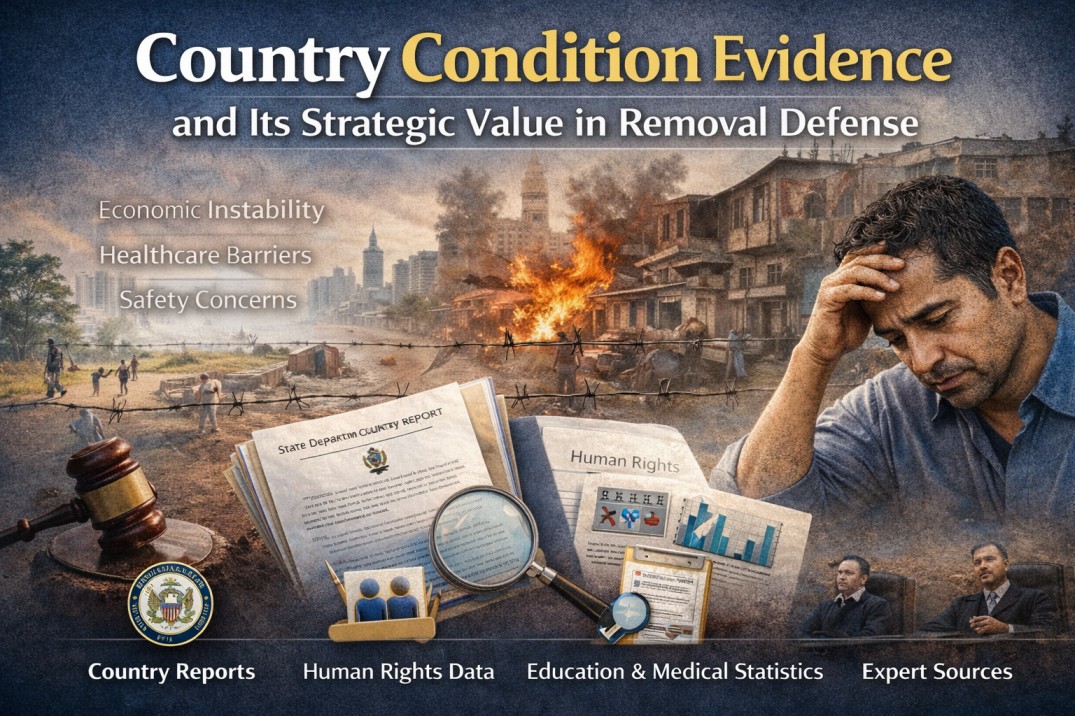
In cancellation of removal cases, much attention is placed on family hardship, residence history, and personal conduct. However, one element that is often underestimated—but legally powerful—is country condition evidence. When properly used, this evidence helps immigration judges understand the real-world consequences of removal beyond the individual’s immediate circumstances.
This article focuses on the role country condition evidence plays in strengthening cancellation of removal cases and why it must be handled strategically.
Country Conditions Provide Critical Context
Immigration judges are required to make decisions within a legal framework, but they do not operate in a vacuum. Country condition evidence helps place hardship claims into context by illustrating what life would realistically look like after removal.
This evidence may address:
- Access to healthcare
- Economic instability
- Educational limitations
- Widespread violence or insecurity
- Discrimination or lack of infrastructure
These conditions help explain why relocation may not be a viable option for qualifying relatives.
Hardship Is Evaluated in Relation to the Destination Country
Courts often assess hardship by comparing life in the United States to life in the country of removal. Country condition evidence helps demonstrate disparities that directly affect:
- Children’s education and safety
- Availability of medical treatment
- Employment prospects
- Social services
- Living standards
Without this comparison, hardship arguments may appear incomplete.
Sources Judges Find Persuasive
Not all country information carries the same weight. Immigration courts typically give greater consideration to:
- U.S. State Department country reports
- Reports from recognized international organizations
- Human rights documentation
- Medical or public health data
- Educational and economic statistics
Personal opinions or unsupported claims rarely influence judicial analysis.
Country Conditions and Children’s Welfare
When U.S. citizen or lawful permanent resident children are involved, country condition evidence becomes especially important. Judges may evaluate:
- School system quality
- Language barriers
- Child healthcare access
- Safety concerns
- Social stability
Evidence helps demonstrate whether relocation would place children at a serious disadvantage.
Medical and Disability Considerations
For families dealing with chronic illness or disability, country condition evidence may show that comparable treatment is unavailable or inaccessible abroad. This is particularly relevant when specialized care, medication, or long-term therapy is required.
Clear documentation connects medical hardship to real-world limitations in the destination country.
Why Legal Framing Matters
Country condition evidence must be connected directly to the applicant’s circumstances. Generic reports alone are rarely enough. Working with an experienced Cancellation of Removal Attorney helps ensure that country information is used strategically—linked clearly to hardship, dependency, and legal standards rather than presented in isolation.
Legal framing turns background information into persuasive evidence.
Avoiding Overuse or Misuse
Submitting excessive or irrelevant country reports can dilute strong arguments. Judges expect concise, targeted evidence that directly supports the claims being made.
Effective cases focus on quality and relevance, not volume.
Country Conditions Strengthen the Full Narrative
Cancellation of removal cases are decided on cumulative factors. Country condition evidence supports hardship claims, explains relocation risks, and reinforces the broader story of why relief is justified.
When aligned with personal evidence, it adds depth and credibility to the case.
Strategic Evidence Shapes Judicial Decisions
Immigration judges must balance law, discretion, and human impact. Country condition evidence helps bridge these elements by grounding personal hardship in documented reality.
With thoughtful preparation and guidance from a trusted Cancellation of Removal Attorney, individuals can ensure that the court fully understands what removal would truly mean—making the difference between speculation and substantiated risk.


Leave a Reply